
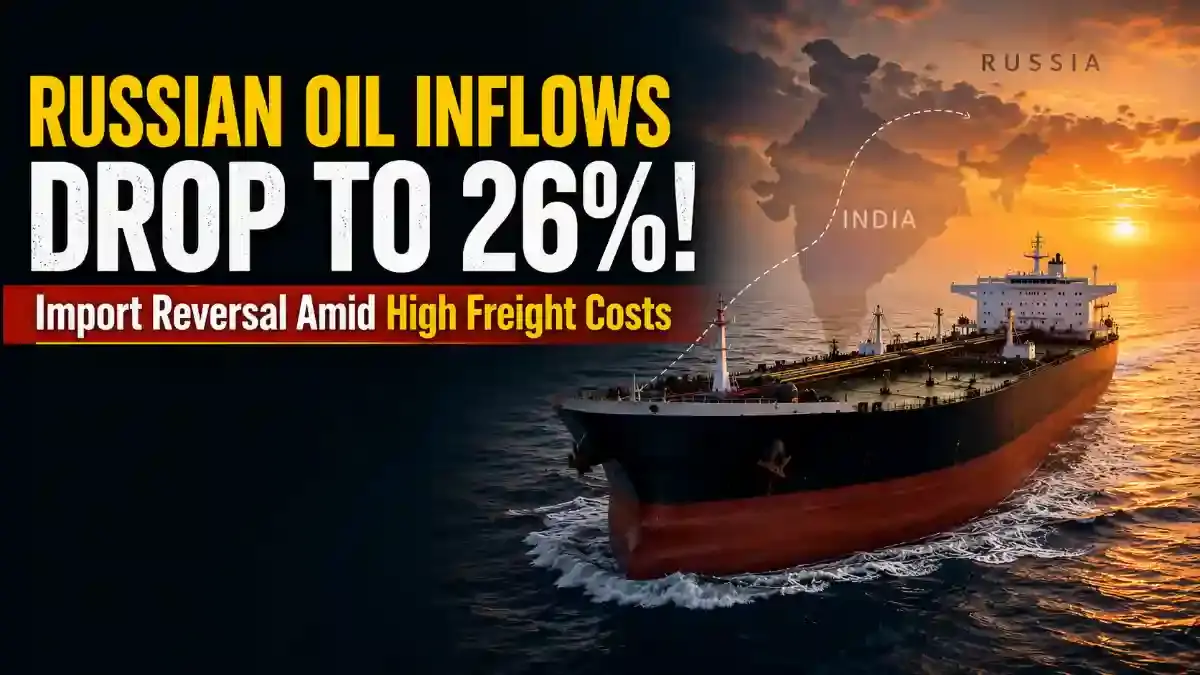

New Delhi: In a noticeable shift across global energy trade flows, India's share of discounted Russian crude oil imports declined to approximately 26% in August 2026, down significantly from earlier record highs above 40%. The dip in intake by domestic refiners comes amid tighter export volumes from Moscow, elevated competition from Chinese buyers, planned seasonal maintenance across Indian refineries, and mounting freight disruptions throughout key Persian Gulf maritime corridors. For continuous updates on bilateral trade, petroleum supply chains, and macroeconomic trends, explore our energy and markets desk.
Key Drivers Behind the Import Contraction
Official trade and vessel tracking data point to a confluence of international supply dynamics and operational bottlenecks impacting Indian crude processing units:
- Tighter Russian Availability: Domestic refinery processing within Russia picked up post-repairs, constraining the surplus seaborne volumes available under the discounted Urals blend.
- Aggressive Chinese Buying: Chinese state and independent 'teapot' refiners significantly increased import bids for Russian ESPO and Urals crude, thinning cargo volumes bound for South Asia.
- Domestic Refinery Maintenance: Key state-run and private refining facilities scheduled periodic turnaround maintenance during the monsoon quarter, tempering overall feedstock runs.
- Shipping Delays & Freight Spikes: Operational bottlenecks and rising maritime insurance premiums across Persian Gulf and Red Sea routes have contributed to BPCL and other refiners experiencing vessel delays and tighter freight logistics.
Refiners Recalibrate Feedstock Sourcing
To plug the shortfall, Indian refiners—including Indian Oil Corporation (IOCL), Bharat Petroleum Corporation (BPCL), and private operators—have stepped up term purchases and spot cargo tenders from traditional Middle Eastern suppliers across Saudi Arabia, Iraq, and the United Arab Emirates. Energy analysts note that while Russian oil remains an integral component of India's import matrix, narrowing price discounts and logistics complications are prompting refiners to adopt dynamic, multi-origin hedging strategies to maintain fuel margins.
Frequently Asked Questions
Ketan
adminPassionate journalist and digital news editor committed to delivering accurate, timely, and fact-checked news.
Related Articles




Latest Articles

Unfathomable Tragedy: A Mother's Despair and a Chi...
Sep 04, 2026
Bittu Tabahi Cleans Ajnar River in MP Single-Hande...
Sep 04, 2026
2026 Tata Curvv Series X Debuts at Rs 10 Lakh: Tri...
Sep 04, 2026
Meta Ads Overhaul: Advantage+ Mandate, Andromeda &...
Sep 04, 2026
Comments (0)
Leave a Comment
No comments yet. Be the first to comment!