
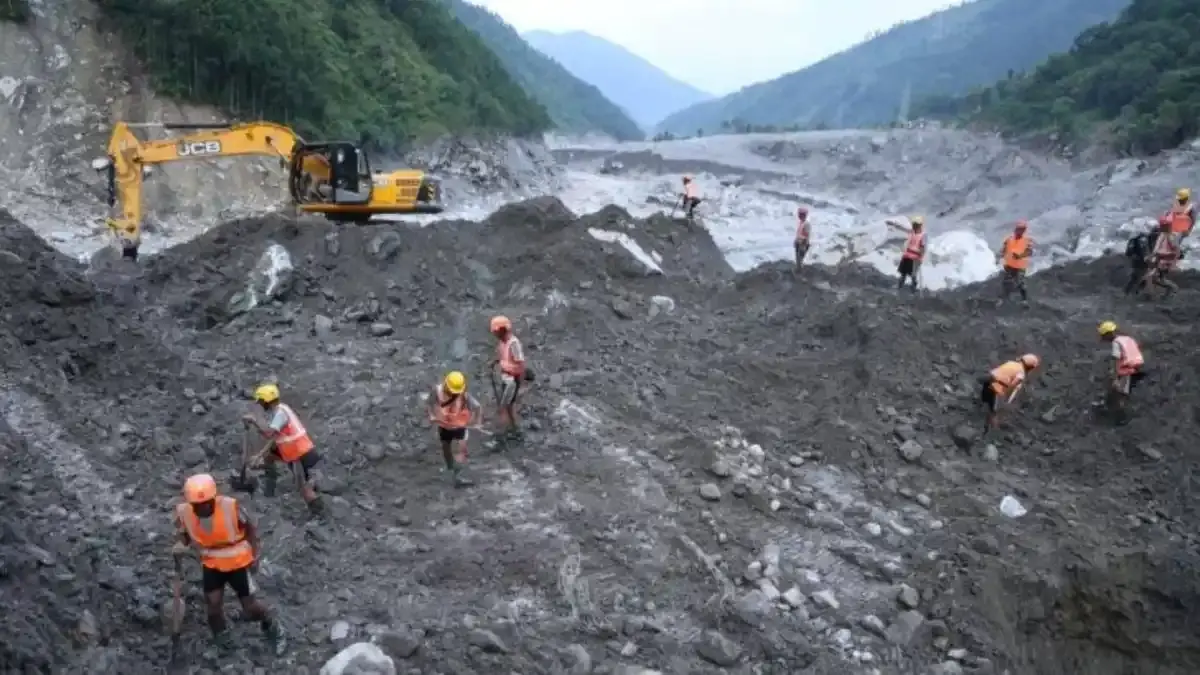

Kathmandu: In one of the most devastating trans-Himalayan natural disasters in recent memory, the death toll from catastrophic flash floods and rock avalanches across Nepal has risen to 1,127, according to official casualty manifests released by the Nepal Police. While joint military and emergency rescue battalions have successfully evacuated nearly 12,000 survivors, over 4,850 people remain untraced or missing. Amid the escalating humanitarian crisis, Indian actor and philanthropist Sonu Sood arrived in Kathmandu alongside relief teams from the Sood Charity Foundation to distribute critical supplies directly to affected survivors. For ongoing coverage on regional disaster response, bilateral assistance, and emergency logistics, explore our humanitarian desk.
Scale of the Calamity and Ground Casualties
The tragedy originated from an abrupt collapse of high-altitude glacial ice, debris, and rock formations along sensitive headwaters near the northern frontier, unleashing torrents of water and silt down major river channels:
- Severely Impacted Districts: Downstream lowlands suffered massive inundation. Chitwan registered the highest number of fatalities at 348, followed by Nawalparasi East (217), Nawalparasi West (190), and Nuwakot (155), with extensive devastation across Dhading, Gorkha, and Rasuwa.
- Identification and Forensic Hurdles: Out of 1,113 postmortem examinations conducted across district hospitals, only 95 bodies could be formally returned to kin due to severe mud disfigurement. Nepal Police have uploaded physical and clothing identifiers for 911 unidentified bodies onto a centralized missing-persons database to aid search efforts.
- Stranded Populations: With crucial bridges washed away and trunk highways severed, thousands remain cut off in remote hamlets without basic cellular connectivity or electricity.
Sonu Sood Joins Relief Operations at Ground Zero
Stepping onto the ground in Kathmandu, Sonu Sood and his foundation volunteers immediately began moving supplies into makeshift relief camps set up along the battered Trishuli River basin:
"We have brought blankets and dry food materials from India, but this is only the first step. We will ensure continuous relief tranches keep arriving over the coming months to help these displaced families rebuild their lives and homes. Nepal, you are not alone. It is everyone's humanitarian duty to step forward and assist Nepal in getting back on its feet."— Sonu Sood, Humanitarian and Founder, Sood Charity Foundation
Indian Bilateral Assistance and Infrastructure Restoration
Coordinating closely with the Nepal Army and the Armed Police Force, the Government of India has activated an emergency logistics pipeline, dispatching more than 5 tonnes of critical emergency medicines, water-purification equipment, and specialized disaster response personnel. Meanwhile, engineering units have initiated round-the-clock efforts to restore satellite communications and damaged hydrological early-warning monitoring sensors across the Trishuli and Bhote Koshi corridors to warn downstream communities against secondary lake-burst hazards.
Frequently Asked Questions
Ketan
adminPassionate journalist and digital news editor committed to delivering accurate, timely, and fact-checked news.
Related Articles



Latest Articles
Unfathomable Tragedy: A Mother's Despair and a Chi...
Sep 04, 2026
Bittu Tabahi Cleans Ajnar River in MP Single-Hande...
Sep 04, 2026
2026 Tata Curvv Series X Debuts at Rs 10 Lakh: Tri...
Sep 04, 2026
Meta Ads Overhaul: Advantage+ Mandate, Andromeda &...
Sep 04, 2026
Comments (0)
Leave a Comment
No comments yet. Be the first to comment!